Table of contents
Søren and I spent 22 April at WindEurope Annual 2026 in Madrid and came away with a clear conclusion. The offshore wind industry is no longer waiting for stability. It is operating as if large scale deployment is already underway.
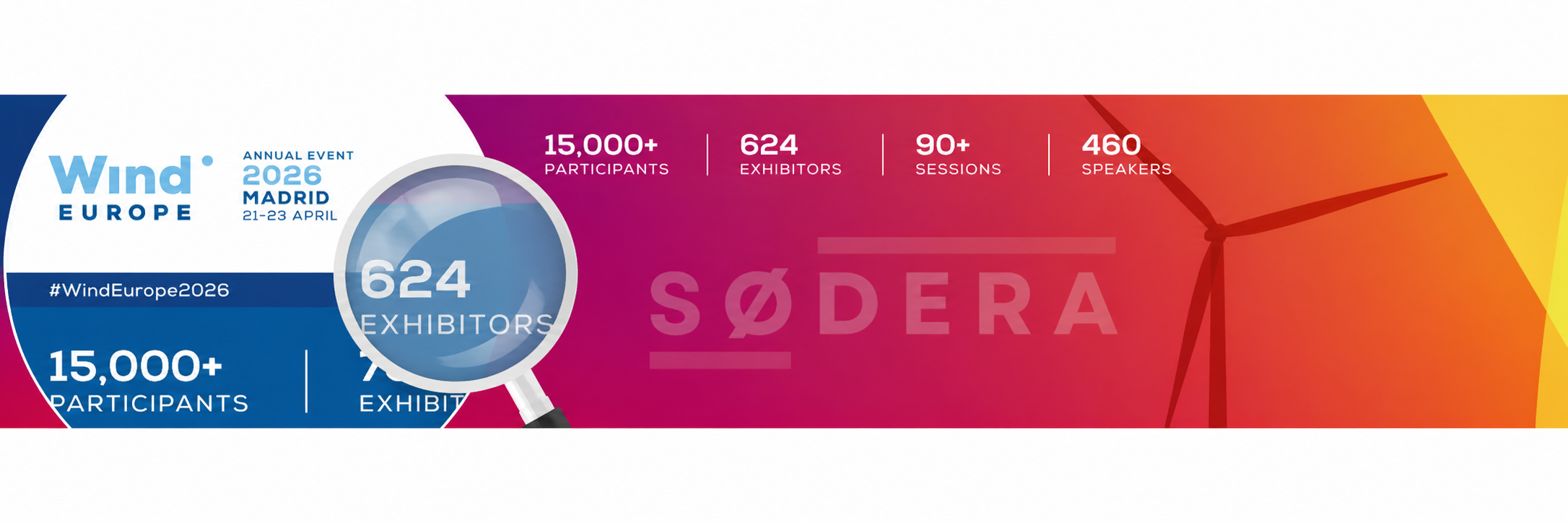
On paper, this is a massive event. 16,000 people. More than 600 exhibitors. An exhibition floor that takes a full day just to cover properly. In reality, most of the value comes down to a handful of conversations you did not plan to have.
This year's theme was "from crisis to confidence." And to be fair, the mood has shifted. The last few years, delays, supply chain issues, and auction instability are still hanging in the background. But on the floor in Madrid, no one was waiting around for conditions to improve. People are building anyway.
With more than 16,000 attendees and over 600 exhibitors, the scale of the event reflects where the sector is heading. The real question now is not whether offshore wind will grow, but whether its information management and asset data systems are ready to support that growth.
Onyx Insight and the reality of building in offshore wind
The most valuable conversation we had was with Onyx Insight.
We spoke at length with Bill Slater, who leads their blade product line. Onyx has built a whole-turbine predictive analytics platform, and their blade health monitoring technology is clearly advancing. Their ecoBlade system monitors structural integrity from inside the blade itself, detecting damage weeks before it would show up in a conventional drone inspection. In an industry where a single blade failure can take a site offline and cost millions, that kind of early warning matters.
But the more important part of the discussion was operational rather than technical. Building in offshore wind is structurally demanding. Development cycles are long. Integration into existing asset environments is complex. Trust is built over time across multiple stakeholders.
Bill spoke openly about these realities and gave us genuinely useful advice on navigating the early stages of a company in this space. That level of transparency is rare and we appreciated it more than we can say.
Offshore wind scale is increasing data complexity
This theme came up repeatedly in conversations with JERA Nex bp and Ørsted.
JERA Nex bp is one of the most significant new players in global offshore wind. A 50:50 joint venture between JERA and bp, launched in 2025, the company brings together a 13GW portfolio of operating assets and development projects across Europe, Asia Pacific and the US. Speaking with a representative of that organisation, it was clear that scale and data complexity grow together.
As offshore wind portfolios expand, the information challenge intensifies rather than simplifies. Each new asset brings additional suppliers, different documentation standards, inconsistent asset structures, and fragmented ownership of data. From an information management perspective, this creates compounding risk. The industry continues to invest heavily in data generation through sensors, monitoring systems, and digital infrastructure. But the underlying data structures are often inconsistent. Without structured asset identification and reliable documentation, the value of that investment is significantly reduced.
Ørsted, the world's largest offshore wind developer, reinforced the same picture. At their scale, keeping asset information structured, consistent, and operationally usable across a global portfolio is a daily challenge. The appetite for better information foundations is real and growing.
TenneT perspective: operational reality matters
Both Søren and I continue to work at TenneT alongside building SøDera. It was good to catch up with colleagues at the event, including Marlon, whose familiar face made a very full day feel a little warmer.
This connection matters because it anchors the conversation in operational reality. Industry events tend to emphasise future capability. Teams working inside live transmission infrastructure focus on what can actually be implemented within complex, regulated, safety-critical systems. That contrast is useful. Offshore wind is advancing quickly, but the practical implementation of information management still faces structural constraints that are often underestimated from the outside.
"Engineering and innovation always capture my attention, and the WindEurope exhibition did not disappoint. There is always something new to discover, at least from my perspective. When breaking down an asset using RDS, I usually focus primarily on its functional aspects. This approach requires a solid understanding of how the asset actually operates. Events like this reinforce the importance of staying informed and prepared, especially when clients seek advice on new systems or unfamiliar technologies.", Søren Christensen, Co-founder & CEO, SøDera
Supply chain depth and niche innovation
Several companies reinforced just how broad the offshore wind ecosystem has become.
IRTH Solutions work on utility asset management and damage prevention. Their world and ours are adjacent rather than identical, but the underlying requirement is the same: asset data that can be trusted when it matters. We see potential for collaboration and the conversation was worth having.
Bioseco use sound and light to deter birds and bats from wind turbines, addressing an environmental compliance constraint that delays more projects than most people realise. A genuinely clever piece of niche innovation.
Resinex Trading was an eye-opener. Seeing the materials supply side of the sector up close made the documentation challenge feel more tangible. Every component has a supply chain behind it. All of that needs to be traceable for the life of the asset. Traceability without structure is just paperwork.
Osonic have developed a low-noise installation method for monopile foundations that removes the need for impact hammers entirely. No hammers, no noise abatement systems, and dramatically reduced underwater noise during installation. For a sector where installation noise is both a regulatory constraint and a genuine environmental concern, this is the kind of foundational innovation that tends to be underappreciated until it becomes standard practice. Osonic is also the recipient of the German Sustainability Award, and the connection to Ørsted gives them a credibility that is hard to build from scratch.
The core issue: information management is lagging behind
A clear pattern emerged across the day.
Offshore wind is generating more data than ever before, but the systems required to structure, validate, and maintain that data are still underdeveloped. The challenges are not new: inconsistent asset identification, incomplete or poorly structured documentation, and weak data handover between project phases. These are not theoretical concerns. They directly affect cost, risk, and operational performance. As offshore wind continues to scale, information management will become a limiting factor if it is not treated as core infrastructure rather than a secondary layer.
Looking ahead to Copenhagen
The next WindEurope Annual will take place in Copenhagen in 2027. For us, that feels personal. It is Søren's home country and the place where SøDera has its roots. That proximity makes the next edition feel more immediate.
We hope the conversations we had in Madrid lead somewhere. Not in a transactional sense, but in the sense that the right connections tend to become the right collaborations when the timing is right. We will see.
By 2027, the offshore wind sector will have expanded further in scale and complexity. The question is whether information management will have kept pace. At present, it is still treated as a secondary concern rather than a foundational system. That position will become increasingly difficult to maintain.
We will be in Copenhagen. Come find us.
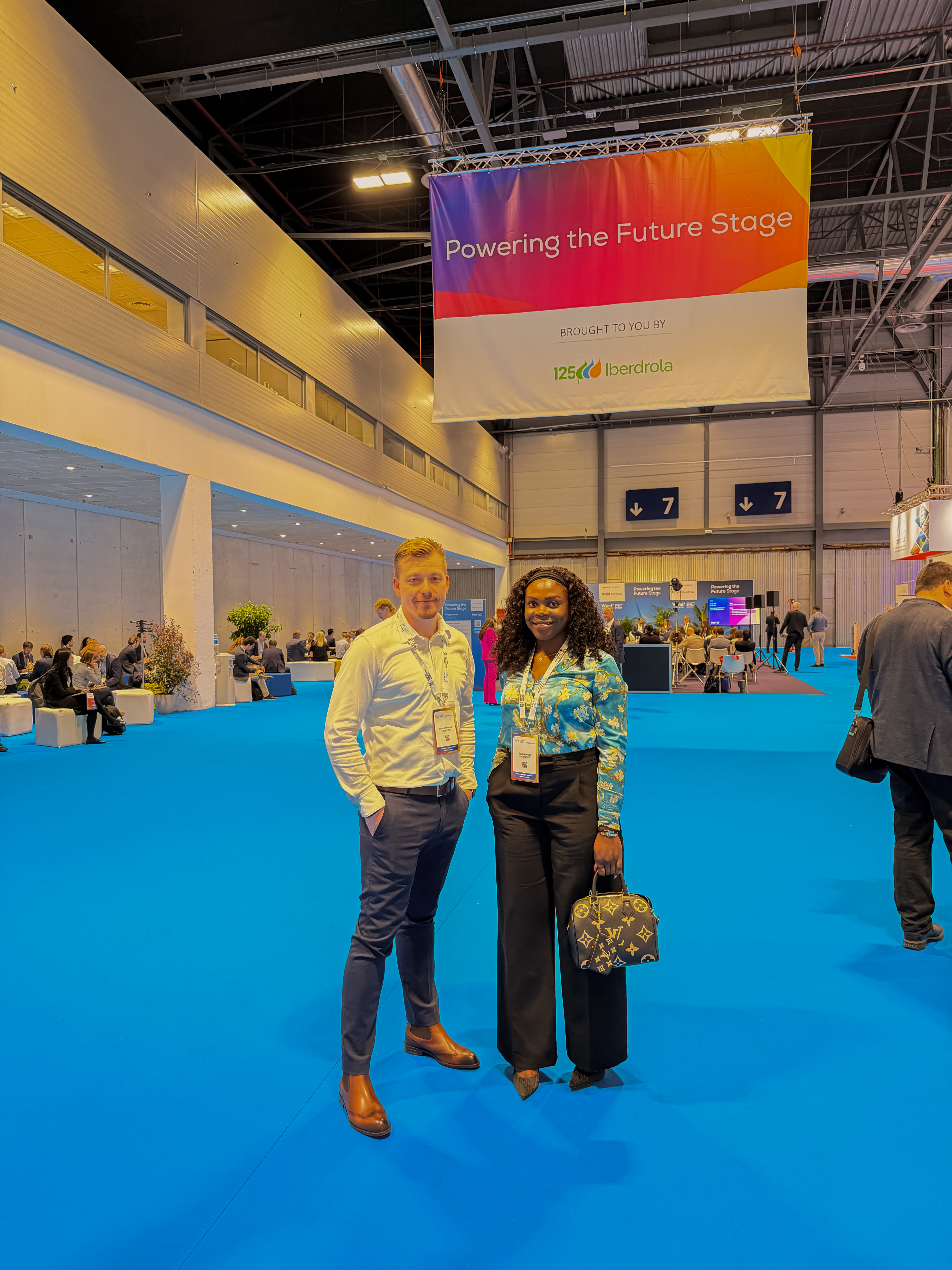
Sylvia Awoudu and Søren Christensen, Co-founders of SøDera, attended Wind Europe Annual 2026 in Madrid on 22 April.
Stay informed
Get new insights in your inbox
When we publish a new article on RDS, document management, or asset data strategy, we will send it to you directly. No noise, no marketing. Just the article.
Unsubscribe any time. We do not share your email.