Table of contents
The Real Cost of Poor Information Management Across the Asset Lifecycle
Information management in energy and offshore wind projects is often underestimated, until the costs become visible.
Can you afford project delays, offshore re-mobilisation, and operational inefficiencies caused by missing or unstructured asset information?
If not, structured information management anchored in Reference Designation Systems (RDS) and aligned with ISO 81346 and ISO 19650 should be treated as a strategic priority.
This article explains how poor information management drives measurable operational losses, and how structured asset data transforms performance across the entire asset lifecycle.
Why Information Management Gets Deprioritized in Energy Projects
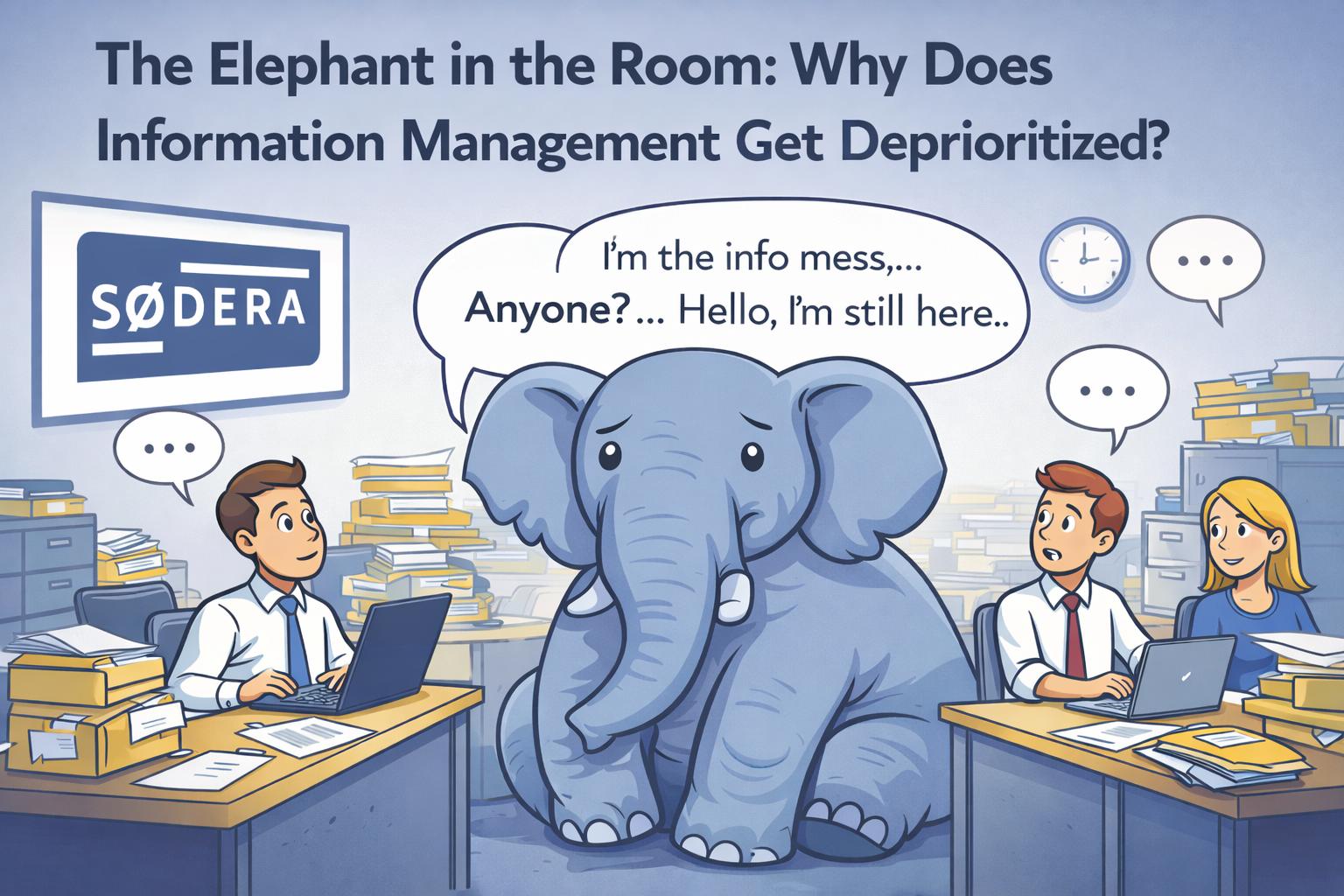
In years of working across energy and industrial projects, one pattern keeps emerging: information management is consistently pushed to the bottom of the priority list. The reason is understandable, the value is invisible at first.
During construction, focus is rightly placed on engineering, fabrication, and installation, especially for offshore assets with fixed sail-out dates. Information management rarely accelerates a weld or cable pull.
But when documentation is missing, inconsistent, or incorrectly tagged, the consequences surface quickly, especially offshore.
"Information management will not make the weld go faster or the cable pull quicker. But on the day you need the right information and it isn't there, the cost becomes visible."
Information management is the process of organising, structuring and maintaining data so that the right information is accessible to the right people at the right time. The assumption is that documentation and data structuring can be cleaned up "later".
But "later" comes with a price tag.
By closeout, engineers who owned the information have demobilized. The remaining teams lack context. Information is lost. Structured handover turns into a scramble.
In well-functioning organizations, this delays project closure. In others, operations inherit the mess and either spend years untangling it, or hire someone to act as a human search engine.
Project closeout becomes chaotic:
- Engineers demobilize with undocumented knowledge
- Asset data loses context
- Handover becomes reactive instead of structured
- Operations inherit incomplete documentation
The result: lifecycle inefficiency from day one.
The Cost of Poor Information Management in Offshore Wind Operations
During Operation - A €20,000 Problem Per Incident
In offshore wind O&M environments, information gaps translate directly into financial loss.
A targeted assessment supported by AI examined a common scenario:
Technicians travel offshore with the wrong spare parts because equipment documentation was not structured or easily searchable.
Result: €8,000–€20,000 per incident, excluding lost production.
Cost Breakdown Per Incident
| Cost Component | Assumption | Estimated Cost |
|---|---|---|
| Vessel Time (CTV) | €7k/day, extra 0.5–1 day wasted | €3,000–€7,000 |
| Vessel Time (SOV) | €100k/day, incremental hours | €8,000–€12,000 |
| Technician Cost | 3–4 techs @ €800/day, ~0.5–1 day lost | €1,500–€3,000 |
| Logistics & Rebooking | Miscellaneous buffer | €1,000–€2,000 |
| Overhead & Admin | ~15% | Variable |
Across a wind farm with dozens of turbines and multiple annual O&M campaigns, this compounds into significant operational expenditure.
Estimated Cost per Incident by Asset Type
| Asset Type | Estimated Cost / Incident |
|---|---|
| Offshore Substation | €10,000 |
| Offshore WTG* | €17,500 |
| Onshore Substation | €2,400 |
| Onshore WTG | €5,000 |
*Offshore WTG assumes a 10MW turbine operating at 50% capacity factor.
The strategic question becomes:
Can you afford not to invest in structured information management?
How RDS (ISO 81346) Improves Asset Traceability During Project Execution
Reference Designation Systems (RDS), defined under ISO 81346, provide structured system codes that connect documentation directly to physical assets.
When correctly implemented:
- P&IDs, manuals, and datasheets are linked to exact systems
- Missing contractor documentation becomes visible immediately
- Engineers can filter all documents tied to a specific subsystem
- Review deadlines are surfaced before becoming compliance risks
Instead of searching manually, teams navigate by system structure.
Without RDS → information is fragmented.
With RDS → information is system-driven and traceable.
Structured information management accelerates:
- Project closeout
- Handover readiness
- Contractor document verification
- Compliance tracking
- Asset registration
When RDS tagging is implemented from design phase onward, document gaps become visible in real time, not during final handover.
This reduces rework, accelerates acceptance, and improves operational readiness.
Integrating RDS, BIM (ISO 19650), and the Digital Twin
Structured asset information extends beyond documentation.
When RDS (ISO 81346) aligns with BIM principles under ISO 19650, it creates a connected digital environment:
- Documents link to 3D models
- Asset data aligns with maintenance systems
- Operational records tie back to physical systems
- Sensor data connects to structured components
This integration forms the foundation of a practical digital twin in energy infrastructure.
Instead of siloed repositories, organizations gain lifecycle traceability, from design through decommissioning.
The value compounds over decades of operation.
Lifecycle Impact: From Construction to Decommissioning
Organizations that treat information as a strategic asset achieve:
- Faster project closeout
- Reduced offshore O&M incidents
- Improved compliance transparency
- Lower lifecycle operating costs
- Reduced operational risk
Information management is not bureaucratic overhead.
It is cost control, risk reduction, and asset intelligence.
"The best time to structure your information was at project start. The second-best time is now."
Strengthen Your Asset Information Strategy
Energy and infrastructure organizations that structure asset information from day one operate leaner, close projects faster, and reduce operational surprises.
If your project is:
- In early design
- Mid-construction
- Approaching handover
- Already operational with fragmented data
Structured information management can still deliver measurable value.
At SøDera, we help energy and infrastructure organizations implement practical information management frameworks, from RDS designation strategies and BIM integration to handover readiness and operational governance.
Ready to reduce lifecycle risk and operational waste?
Stay informed
Get new insights in your inbox
When we publish a new article on RDS, document management, or asset data strategy, we will send it to you directly. No noise, no marketing. Just the article.
Unsubscribe any time. We do not share your email.