Over the past decades, the power and energy industry has navigated two distinct naming conventions defined by the International Organization for Standardization (ISO). These conventions are rooted in the ISO 81346 standard series, which covers Reference Designation Systems (RDS).
ISO 81346-1 and ISO 81346-2 establish the foundational principles of RDS. Building on this, ISO 81346-10 introduced a more domain-specific application, first as RDS-PP (Reference Designation System for Power Plants) and later as RDS-PS (Reference Designation System for Power Supply Systems).
While both aim to bring order and clarity to complex technical assets, the transition from RDS-PP to RDS-PS has caused notable disruption across the industry. Most notably, RDS-PS is not backward-compatible with RDS-PP, leaving many organizations uncertain about which path to follow.
This insight article provides a clear perspective on both naming conventions and offers guidance for companies considering the implementation of a standardized Reference Designation System.
Confusion in the Industry
Can I choose, and what should I choose?
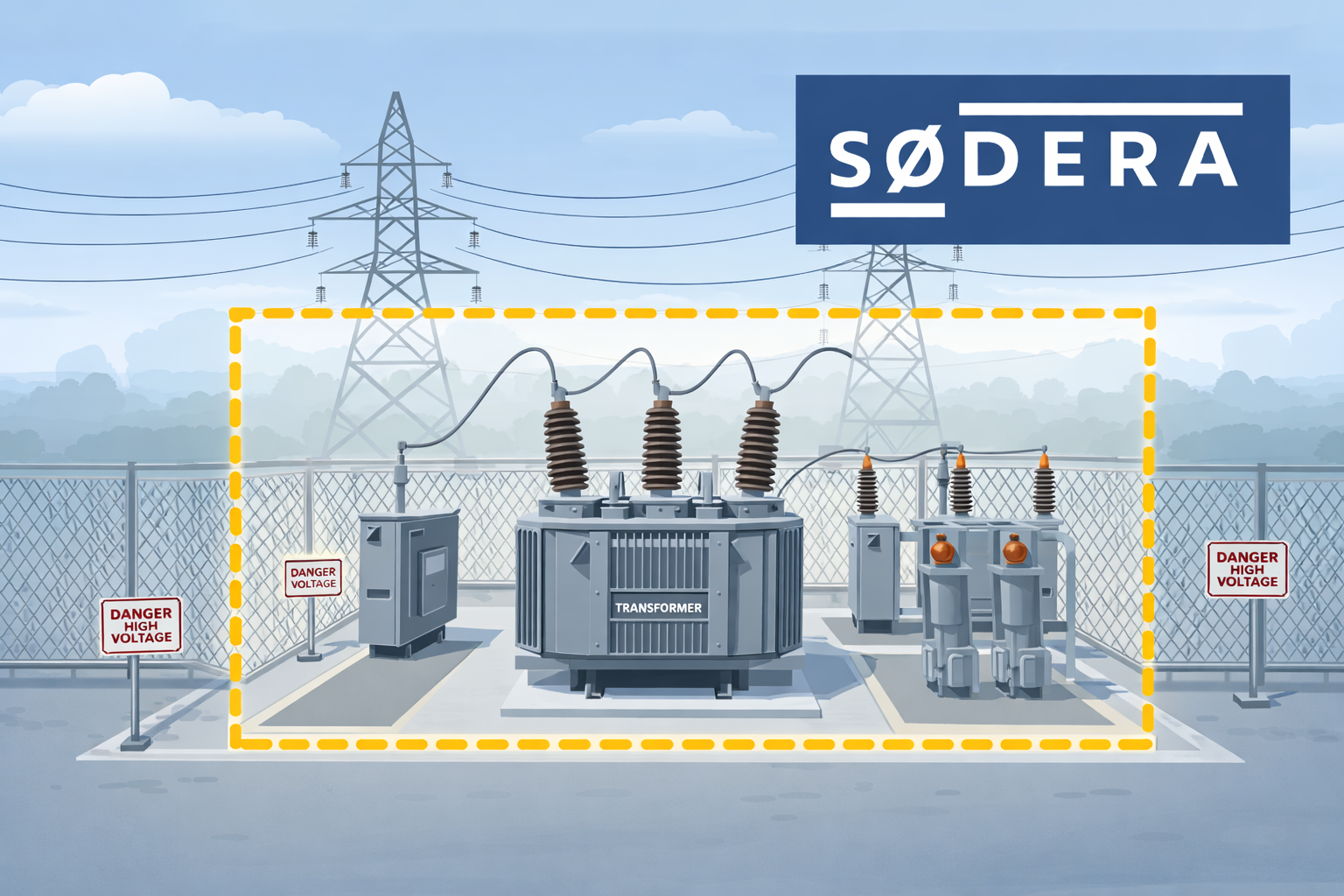
Whether you apply RDS-PP or RDS-PS, your physical assets remain unchanged. A transformer does not become more or less complex simply because it is named Frank instead of Peter. However, the way assets are structured, communicated, and governed does change, and this can have significant long-term implications.
Let's look at the core differences.
RDS-PP: Proven, Structured, and Operationally Focused
RDS-PP has a long and successful track record, particularly within the power plant sector. Its strength lies in fixed principles, predefined system boundaries, and consistent rules, which together enable a high level of standardization.
For example, regardless of geography, Europe or Asia, the transformer system within a substation is always identified using the same functional code, such as:
=T001 ATA10
Key characteristics of RDS-PP include:
- Fixed syntax and consistent use of leading zeros
- Strong human readability
- Clear, predefined system boundaries
- Extensive application guidelines published by VGB
- A design philosophy strongly aligned with the operation and maintenance phase
This consistency makes RDS-PP easy to understand, compare, and scale across large fleets of assets.
RDS-PS: Flexible, Purpose-Driven, and Controversial
RDS-PS represents a fundamental shift in philosophy.
ISO 81346-10:2022 explicitly states:
"The reference designation is not bound to a fixed structural pattern."
This means the user is free to define the structure of the designation system, as long the correct classification codes are used (for example =B1.KF1). In practice, two companies are not required to structure their RDS-PS in the same way.
This flexibility offers clear advantages:
- Adaptability to different business purposes
- Better alignment with engineering, digitalization, or lifecycle strategies
- Greater future-proofing for evolving systems
However, it also introduces a downside: reduced standardization across organizations.
Example: Transformer System
Consider a transformer system in a substation:
| Naming convention | Designation |
|---|---|
| RDS-PP T32 edition 1 | =T001 ATA10 |
| RDS-PS (user A) | =B1.KF1 |
| RDS-PS (user B) | =B1.JE1.KF1 |
Both RDS-PS examples comply with the ISO 81346 series, yet they represent different structural interpretations of the same asset. Unlike RDS-PP, where system boundaries are predefined in VGB application guidelines, RDS-PS leaves boundary definition to the user.
In short: RDS-PS enables customization, while RDS-PP enforces consistency.
Industry Mitigation: Raising the Bar with Application Guidelines
Recognizing the risk of inconsistency, parts of the industry, most notably the wind sector, have taken proactive steps.
The TIM Wind working group has developed application guidelines for wind power plants, effectively creating a shared foundation for implementing RDS-PS. These guidelines significantly improve consistency while retaining the flexibility intended by the standard.
That said, even with such guidelines in place, RDS-PS implementations will still vary from company to company. Each organization must define its structure according to its own needs and purpose.
Conclusion: Choosing the Right Path Forward
RDS-PS, by design, requires each company to create its own specification. This is not a weakness, it is an intentional feature of the standard. ISO itself recommends that projects define project-specific designation specifications, ideally supported by industry guidelines such as those from TIM Wind.
RDS-PP, meanwhile, is far from obsolete. It continues to be maintained and updated by VGB Energy and remains compliant with ISO 81346-1 and parts of ISO 81346-2 (2019). For organizations with an existing fleet structured under RDS-PP, continuing with this system often makes practical and economic sense.
So, what should you choose?
- Brownfield assets / existing fleets → RDS-PP remains a strong and reliable option
- Greenfield projects or major asset restructurings → RDS-PS is generally the more future-proof choice
The key is not choosing the "right" standard, but choosing the right implementation strategy.
That is where experience, domain knowledge, and a clear understanding of both standards make the difference.
Making the Decision
Ask yourself these questions:
- What type of assets do we operate?
- What standards do our industry peers use?
- What do our suppliers and contractors expect?
- How much flexibility do we need?
- What are our long-term integration plans?
Need help deciding?
Contact SøDera for expert guidance on implementing the right RDS for your organization.
Stay informed
Get new insights in your inbox
When we publish a new article on RDS, document management, or asset data strategy, we will send it to you directly. No noise, no marketing. Just the article.
Unsubscribe any time. We do not share your email.