Master the Language of Industrial Assets
A Reference Designation System based on ISO/IEC 81346 is a language. SøDera teaches your engineers, technicians, and project teams to speak it fluently, so that RDS-PP and RDS-PS designations are applied consistently across the lifecycle of your energy assets, from design through to daily operations.
"A Reference Designation System is a language, and a language only works if everyone speaks it. We make sure your people speak RDS-PP or RDS-PS fluently, in the context of your own assets."
Søren Christensen · Co-founder & CEO, SøDera
Why training matters
The critical role of competency in RDS implementation
A Reference Designation System based on ISO/IEC 81346 is, in the most literal sense, a language. It gives engineering organisations a shared vocabulary for describing industrial assets, a grammar for combining those words into well-formed designations, and a syntax that lets a single tag carry meaning across disciplines, vendors, and decades of operation. Like any language, it only works when the people using it are genuinely fluent, and that fluency only comes through structured training. Without it, the standard becomes a phrasebook copied without understanding, and the designation framework drifts steadily away from its intended structure.
Effective ISO/IEC 81346 training is therefore closer to language teaching than to code memorisation. It builds vocabulary through the object classes and reference designations defined in the standard, but more importantly it teaches grammar: the multi-aspect views of Function, Product, and Location, and how each aspect expresses a different perspective on the same asset. RDS training also has to cover the regional dialects of the standard, RDS-PP for power plants and RDS-PS for power systems, so that engineers can read and write designations correctly in the context of the assets they actually work with. Fluency, not vocabulary, is what allows an engineer to look at an unfamiliar tag and immediately understand what it describes.
A shared language is also what holds an organisation together. When design engineers, document controllers, operations staff, and maintenance technicians all speak RDS in the same way, asset information flows cleanly between disciplines, between project phases, and between the systems that depend on it. When they do not, every handover becomes a translation exercise, and every translation introduces errors. Organisations that invest in genuine RDS training and fluency consistently see fewer misunderstandings in asset handovers, faster adoption of digital tools that depend on consistent asset tagging, and a measurable improvement in the quality of the data that underpins every operational decision.
In my experience, implementing RDS-PP or RDS-PS is roughly a 50/50 effort. Half the work is developing the asset structure itself, defining the function, product, and location aspects in a way that genuinely reflects the plant or system. The other half, often underestimated, is making sure the structure is used correctly once it exists. You can engage a third party to develop the asset structure for you, and many operators do. What you cannot outsource is the daily fluency of your own people. RDS-PP training and RDS-PS training are not interchangeable, and neither is optional. Both are essential investments for any organisation that wants the designation system to remain accurate, consistent, and useful over the lifetime of the assets it describes.
How we deliver RDS training
On-site delivery
We come to your location and deliver structured workshops in your environment, using your assets and systems as the basis for practical exercises. Designed for groups of 4 to 20 participants, sessions range from half-day introductions to multi-day programmes covering either RDS-PP or RDS-PS in depth, grounded in the ISO/IEC 81346 series. The most effective format for teams who will apply the standard immediately.
Remote delivery
Live, instructor-led sessions delivered online with full interactivity, exercises, and Q&A. Effective for geographically distributed teams or as a more cost-efficient option for introductory programmes.
The cost of expecting fluency without training
Consider a project where engineers without proper RDS training apply designation codes to hundreds of new components. The errors are rarely visible during design. They surface at commissioning, when the CMMS fails to integrate with the asset register, or in operations, when maintenance planning cannot trust the data it depends on. The cost of identifying and correcting these errors scales sharply with how late they are discovered:
- • Caught during engineering: €25,000–50,000 in rework, document re-issue, and drawing updates.
- • Caught at commissioning: €100,000–250,000 once CMMS re-mapping, asset register reconciliation, and handover delays are included.
- • Caught in operations: often well above €500,000, compounded over years through failed digital initiatives, manual workarounds, and the inability to integrate with digital twin or analytics platforms.
These three scenarios cover what happens when the wrong tags are written into the asset register. They can be audited, identified, and corrected, however expensive that becomes. There is a fourth failure mode that cannot be solved with a one-off remediation project, because it does not happen once. It happens every day.
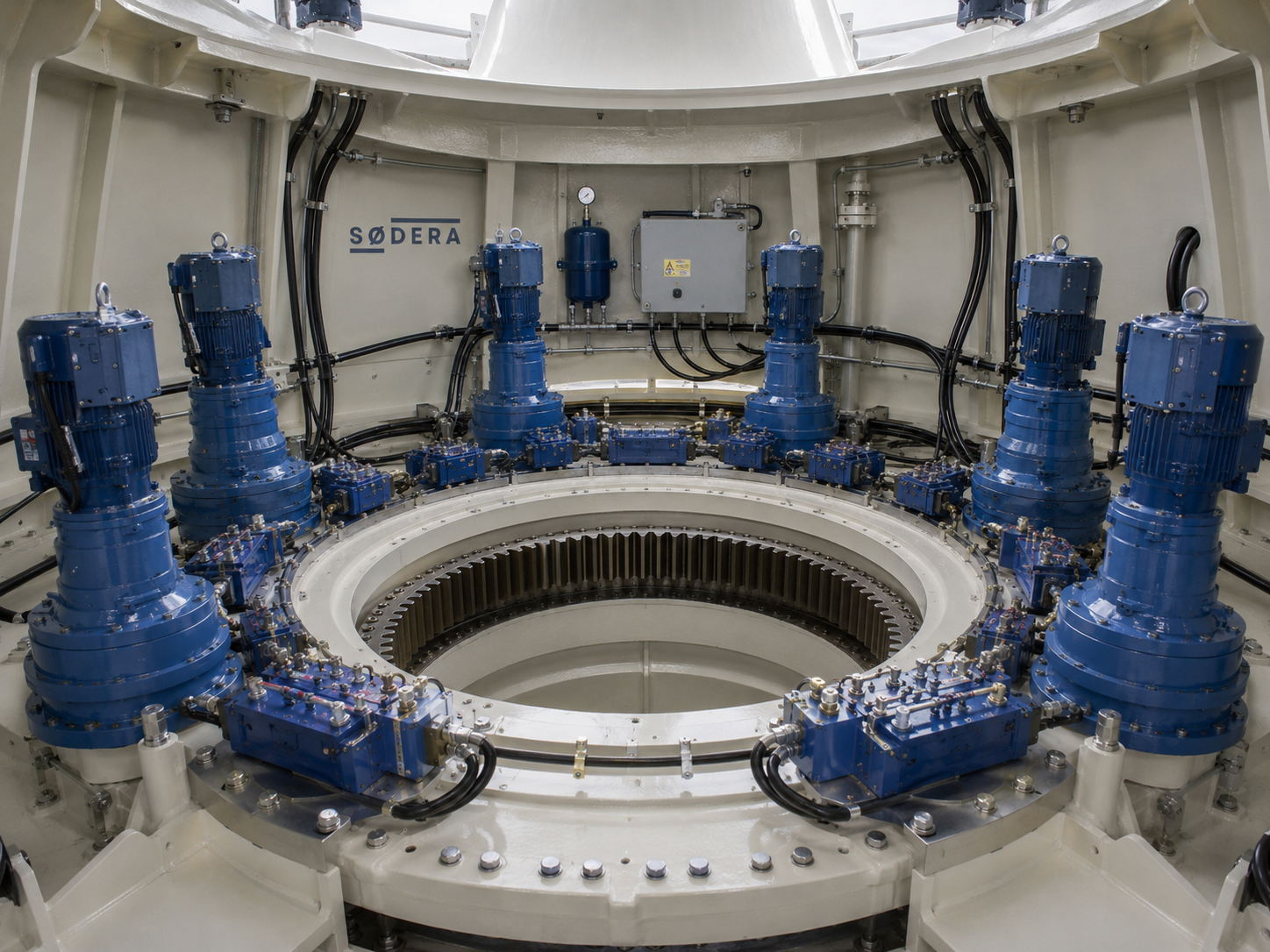
The most expensive failure mode is the one nobody sees: technicians in operations who back-report against the wrong asset because they do not speak the RDS language fluently. In a wind turbine with eight yaw drives, the data will often show that "yaw drive 1" has been replaced five times while the other seven appear untouched. The yaw drives are not failing unevenly. The technicians are simply tagging every replacement against the first or most accessible identifier, because nobody taught them which designation belongs to which asset. Add to that physical labelling that is missing, faded, or inconsistent across the plant, and a workforce that has never been shown what incorrect back-reporting actually costs the organisation, and the result is the path of least resistance: tag it to the first identifier you can read. The same pattern appears across pitch motors, transformer cooling fans, switchgear bays, and every other repeated component in the plant.
The financial impact compounds quietly. Reliability engineers cannot identify which positions genuinely have higher failure rates. Predictive maintenance models train on noise. Spare parts forecasting is wrong. Warranty claims against component manufacturers cannot be substantiated because the maintenance history does not survive scrutiny. Across a portfolio of assets, this is easily a seven-figure annual cost that owners rarely connect back to its origin: technicians who were never trained to speak the language they are asked to write in every day.
Beyond the financial cost, the silent damage is the erosion of trust in the data itself, which makes every subsequent digital initiative harder to justify internally. RDS training is a fraction of the cost of any of these scenarios, and it is the only intervention that prevents all of them.
Our approach
From standard to fluency
Every programme is tailored to your sector, your asset types, and the people who will be applying the standard daily. We do not deliver generic standards-awareness sessions. We teach engineers and technicians to read, write, and reason in RDS-PP or RDS-PS confidently in the context of the assets they actually own.
Fluency assessment
Before designing the programme, we identify where each role currently sits on the fluency scale. A design engineer needs different depth than a wind farm technician, and the curriculum reflects that.
Customised curriculum
Modules built around your sector and your asset types. RDS-PP for a power plant engineering team looks very different from RDS-PS for an offshore wind operations team, even though both rest on ISO/IEC 81346.
Hands-on workshops
Practical exercises drawn from your own asset structure, not abstract examples. Participants apply designation rules to equipment they recognise, which is where the standard stops being a document and starts being a tool.
Grammar and dialects
Comprehensive coverage of the ISO/IEC 81346 series and the sector-specific dialects, RDS-PP for power plants and RDS-PS for renewables and grid infrastructure. Participants understand not just what to do but why the standard is structured the way it is.
Tool integration
Guidance on applying RDS within your existing engineering, document control, and CMMS environments. The standard only delivers value when it is embedded in the tools people use every day.
Ongoing support
Certificates of completion, follow-up sessions, and access to ask the questions that always arise once implementation begins. Fluency is built through use, not in a single workshop.
A pattern we see repeatedly
When skilled engineers do not share a common language
The Situation
Across large European utilities, we consistently encounter engineering departments where the individuals are highly competent in their own disciplines but do not share a common understanding of ISO/IEC 81346 or how to apply it. The result is inconsistent asset tagging across a diverse portfolio of power plants, substations, and wind farms. Different sites speak different versions of the same standard. The same asset type is designated differently depending on when the facility was built and who led the engineering team at the time.
What Good Looks Like
A structured RDS training programme delivered to the engineering team, combining grammar instruction on the ISO/IEC 81346 series with hands-on workshops applying RDS-PP or RDS-PS to the operator's specific asset types, creates a shared language across the organisation. Every engineer, from the most senior to the most recently hired, applies the standard in the same way. The designation manual stops being a document on a shelf and becomes something the team actively uses every day.
The Outcome
When RDS training is delivered practically and tailored to the operator's specific assets, teams consistently show significant improvement in correct standard application. Data discrepancies in subsequent project handovers reduce materially. Confidence among engineers and technicians when working with asset data increases measurably. And the organisation has the internal fluency it needs to sustain a compliant designation system over the full asset lifecycle without external intervention for every change.
Why train with us
Practitioners, not lecturers
SøDera's RDS training is delivered by practitioners who have applied ISO/IEC 81346 in the field on real energy projects. We do not teach from a standards document. We teach from direct experience of what goes wrong when the standard is misapplied, and how to apply it correctly in the operational context of the energy sector. Every programme is shaped by what we have seen succeed and fail across power plants, substations, and offshore wind, so that your team learns from real engineering reality rather than abstract examples.
Who attends our RDS training
From our team